
- Company
- Products
- Technical report
- Indusrial cleaning
- Micro Joining and Assembly Technology
- Ultrasonic technology
- Trouble solution
- Cleaning
- Removing
- Attaching
- PCB Columns
A conductive sheet is a sheet-shaped material with an electrically conductive layer.
Conductive sheets are used for a wide variety of applications, including electrode connections, noise suppression, and grounding. In recent years, they have also been adopted for extracting electrodes from transparent conductive films and flexible devices.
There are various types of conductive sheets, including conductive tapes, anisotropic conductive films (ACFs), and thermocompression-bonding conductive sheets, and the appropriate type must be selected according to the application.
A conductive film is a functional film in which a conductive layer such as ITO, silver nanowires, or copper mesh is formed on a film substrate such as PET or PEN.
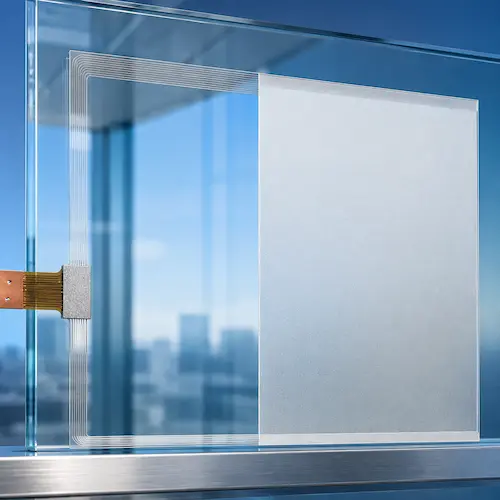
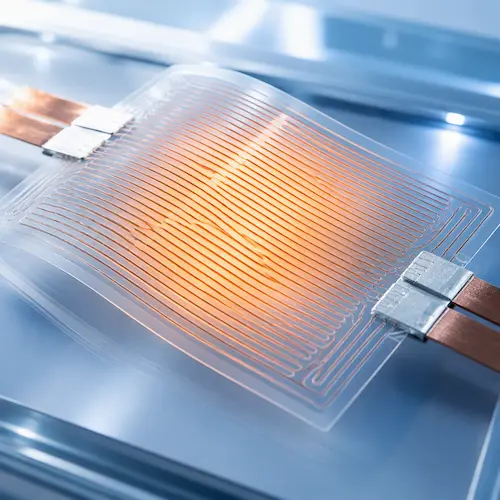
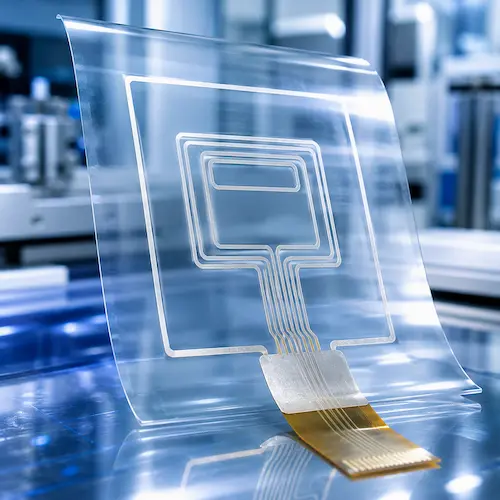
It is used in applications such as smart films, transparent heaters, transparent antennas, touch panels, and film-type solar cells. Although conductive films are thin and flexible, extracting electrodes from them can present a challenge.
| Features | Challenges | Applications | How to Use |
|---|---|---|---|
| Comparison | Properties | Q&A |
The TKS Series is a conductive sheet that can be thermocompression-bonded at low temperatures of 100 to 120°C. It is suitable for electrode connections to heat-sensitive materials such as transparent conductive films and PET films, enabling conductive connections to film devices that are difficult to achieve with conventional soldering.
A specially designed conductive layer maintains flexibility even after connection. It is well suited for film devices and components for wearable equipment that are subject to bending or stretching, contributing to thin and flexible product designs.
Electrodes can be extracted directly from transparent conductive films such as ITO films and transparent heaters. Compared with ACF and soldering, thinner designs and fewer process steps can be expected, enabling designs that make full use of the performance of transparent film devices.
The TKS Series conductive sheets are thermocompression-bonding conductive sheets developed for transparent conductive films. By combining our proprietary specially shaped silver powder with a thermoplastic resin, they achieve both flexibility and electrical conductivity, which can be difficult with conventional conductive adhesives.
The TKS Series is a low-temperature thermocompression-bonding conductive sheet developed for transparent conductive films. Its performance is supported by KAKEN TECH's proprietary specially shaped TK Silver Powder.
With conventional conductive adhesives, bending or deformation of a film can reduce contact between silver particles, causing electrical resistance to increase. To achieve both flexibility and conductivity, KAKEN TECH developed a large, thin, specially shaped TK Silver Powder optimized for transparent conductive film applications. Thanks to this proprietary technology, the TKS Series maintains stable conductivity even in environments where bending or deformation occurs.
| 【Conventional Conductive Adhesives】 When a conductive adhesive applied to a film is bent, it is stretched laterally. As contact between silver particles within the conductive layer decreases, electrical resistance increases and conductivity decreases. |
||
 |
 |
 |
| 【TKS Series】 By using large, thin, specially shaped TK Silver Powder, contact between silver particles is maintained even when the film is bent. This enables conductive connections that combine flexibility with stable electrical conductivity. |
||
 |
 |
 |
The TKS Series conductive sheets are low-temperature thermocompression-bonding conductive sheets developed for extracting electrodes from transparent conductive films and flexible devices. They are expected to be used in next-generation devices that require thinness and flexibility, including smart films, transparent heaters, and film-type solar cells.
 |
 |
 |
 |
|---|---|---|---|
|
|||
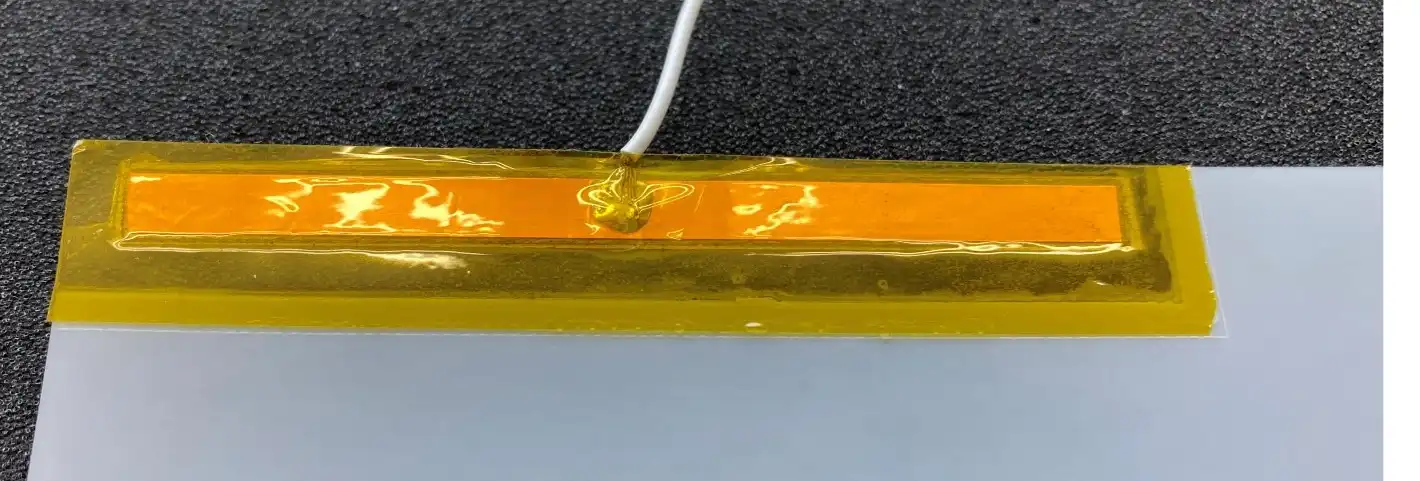
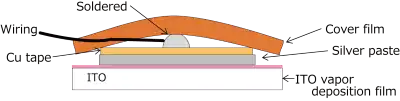
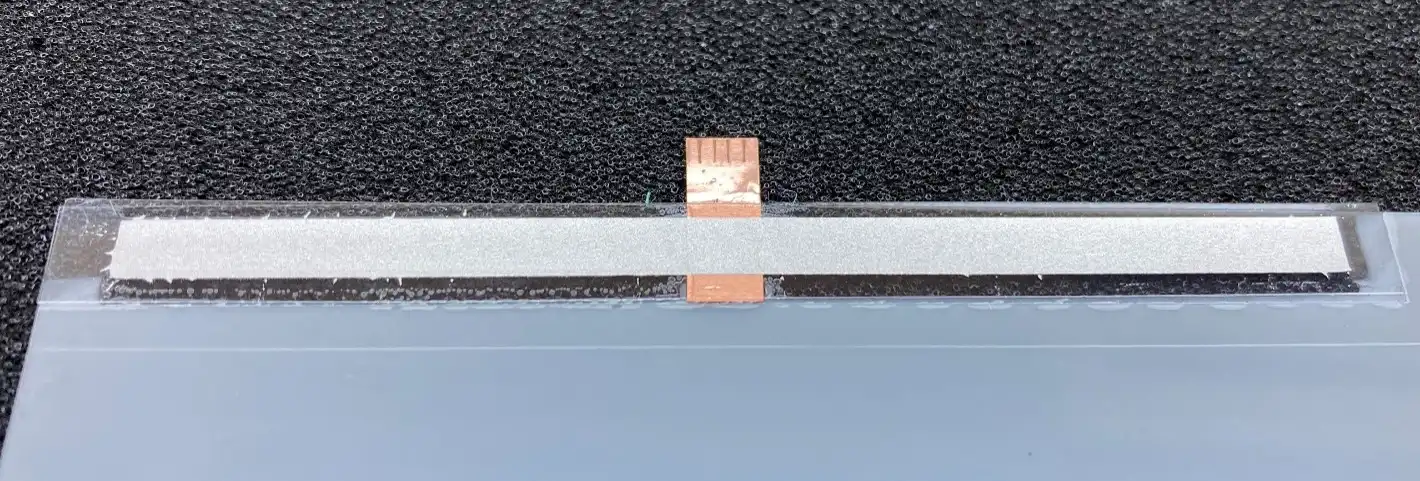
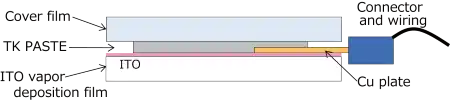
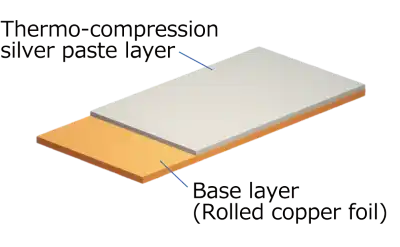
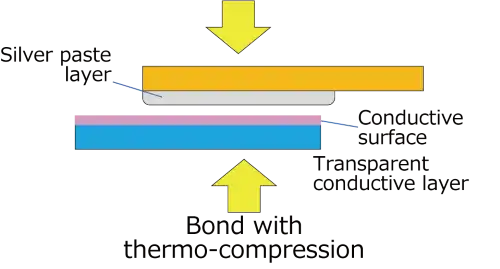
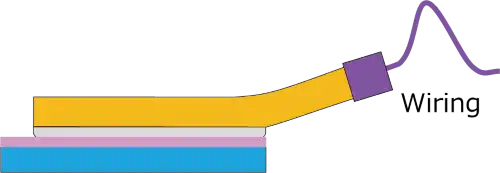
With conventional methods, silver paste and soldering must be used together to connect the ITO surface to copper tape, resulting in increased connection thickness and additional process steps. By using the TKS Series conductive sheets, electrode terminals can be thermocompression-bonded directly to transparent conductive films, enabling both thinner designs and fewer process steps.
 |  |
 | |
 |  |
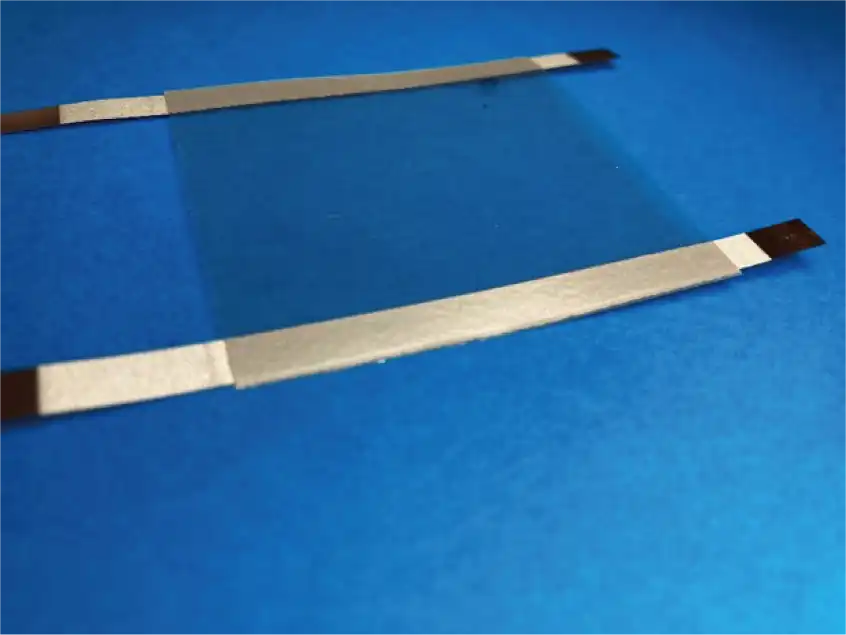
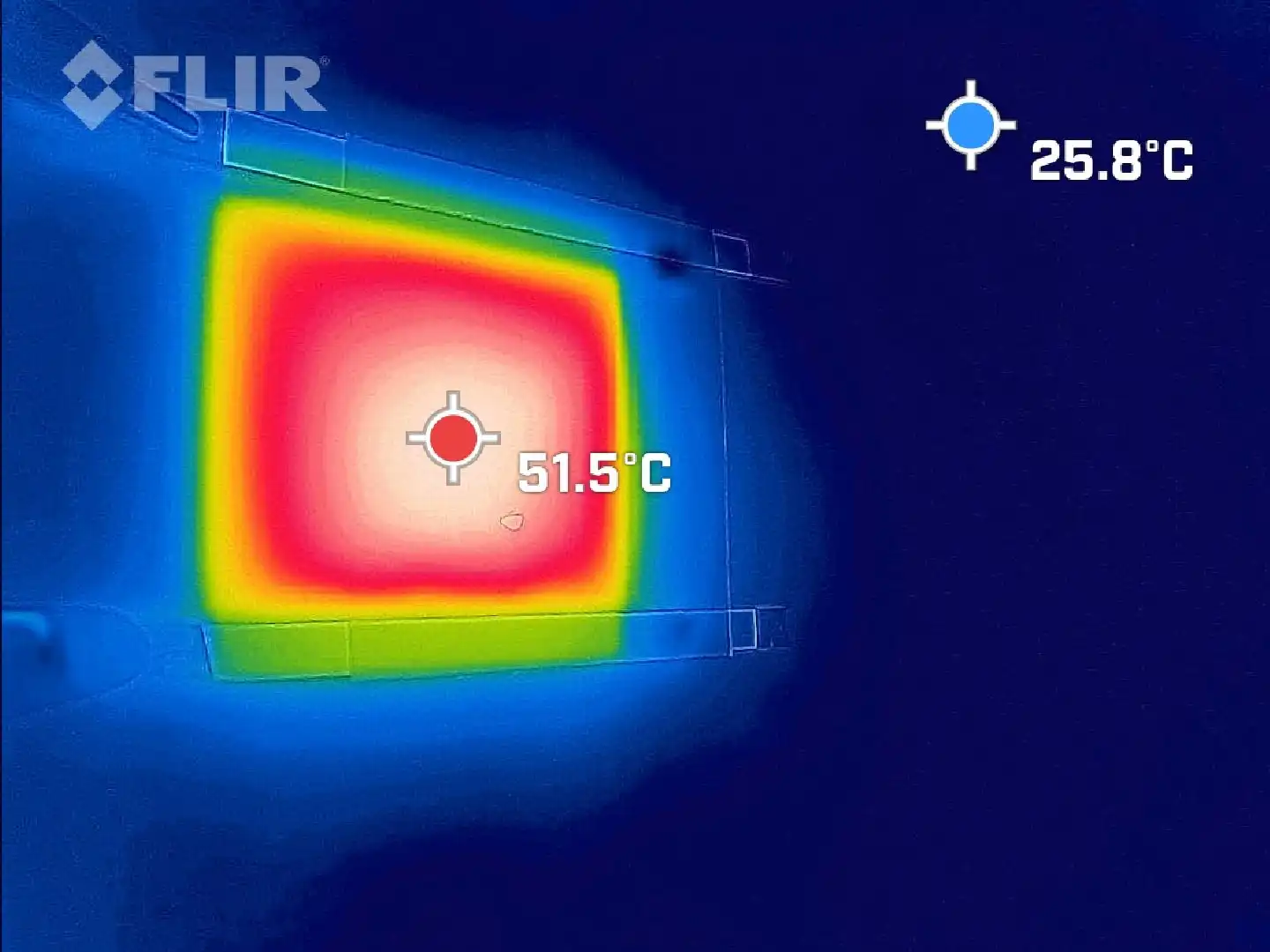
Because the sheet can be thermocompression-bonded directly to heater circuits formed on transparent conductive films, it is expected to reduce the risk of increased resistance and localized heat generation associated with ACF connections. Stable conductive connections make it possible to fully utilize the performance of transparent heaters.
 |  |
|
||
 |
 |
 |
Various methods are available for extracting electrodes from transparent conductive films, including conductive adhesives, anisotropic conductive films (ACFs), and soldering. However, each method has challenges related to thermal deformation, resistance, flexibility, and other factors. By providing conductive connections through low-temperature thermocompression bonding, the TKS Series conductive sheets enable thin, low-resistance, highly flexible designs that take advantage of the characteristics of transparent conductive films.
| Comparison Item | TKS Series Conductive Sheet |
Conductive Adhesive |
ACF | Soldering | Eyelet |
|---|---|---|---|---|---|
| Risk of Thermal Deformation | ○ | △~○ | × | × | ○ |
| Flexibility | ○ | × | △ | × | × |
| Electrical Conductivity | ○ | ○ | △ | ◎ | △ |
| Thin Profile | ○ | ○ | ○ | × | × |
| Number of Process Steps | ○ | × | △~○ | △ | △ |
<Comparison of Electrode Extraction Methods for Transparent Conductive Films>
Available as a screen-printable paste type or as a pre-printed sheet type.
| Low-Temperature Thermocompression-Bonding Conductive Adhesive TK PASTE TKS-240 |
|||
|---|---|---|---|
| Form | Paste Type | Sheet Type | |
| Main Components | Silver, Thermoplastic Resin | ||
| Base Layer | - | Rolled Copper Foil (C1020 50um) | |
| Printed Area Size | - | 75mm×75mm (Pre-cut width: 5mm or 3mm) | |
| Paste Application Method | Screen Printing | - | |
| Paste Drying Conditions | 60℃×40 min~100℃×20 min | - | |
| Bonding Conditions | Bonding Temperature | 100~120℃ | |
| Bonding Time | 60~120 sec | ||
| Pressure | 0.5~2.0MPa | ||
| Volume Resistivity | 2×10⁻⁴Ω・cm | ||
| Storage Temperature | Frozen (-10℃ or below) | Room Temperature | |
| Catalog Download |  |
||
Are you looking to extract electrodes from transparent conductive films, concerned about resistance or heat generation with ACF, trying to avoid thermal deformation caused by soldering, considering connection methods for smart films or transparent heaters, or seeking thinner and more flexible electrode connections?
KAKEN TECH can recommend conductive connection methods suited to your film material, conductive layer type, and operating environment. Evaluation samples and technical documents are also available, so please feel free to contact us.
| Please be as specific as possible in your inquiry. Depending on the contents of your inquiry, it may take some time for us to reply to you. If you need product documentation (SDS/safety data sheets, TDS, instruction manuals, etc.), please contact us via “Request for SDS and other product documentation” ※Sales message through the inquiry form are strictly prohibited. |
KAKEN TECH, MICROCLEANER, MICROCLEAN&MARKLESS and MARKLESS are trademarks of KAKEN TECH CO., LTD. in PRC.
KAKEN TECH is a trademark of KAKEN TECH CO., LTD. in the U.S..
 Inquiry form
